
How Local SEO Freelancers Are Using Generative Engine Optimization (GEO) to Stay Visible in AI Search
Why Local SEO Needs GEO in the Age of AI Search
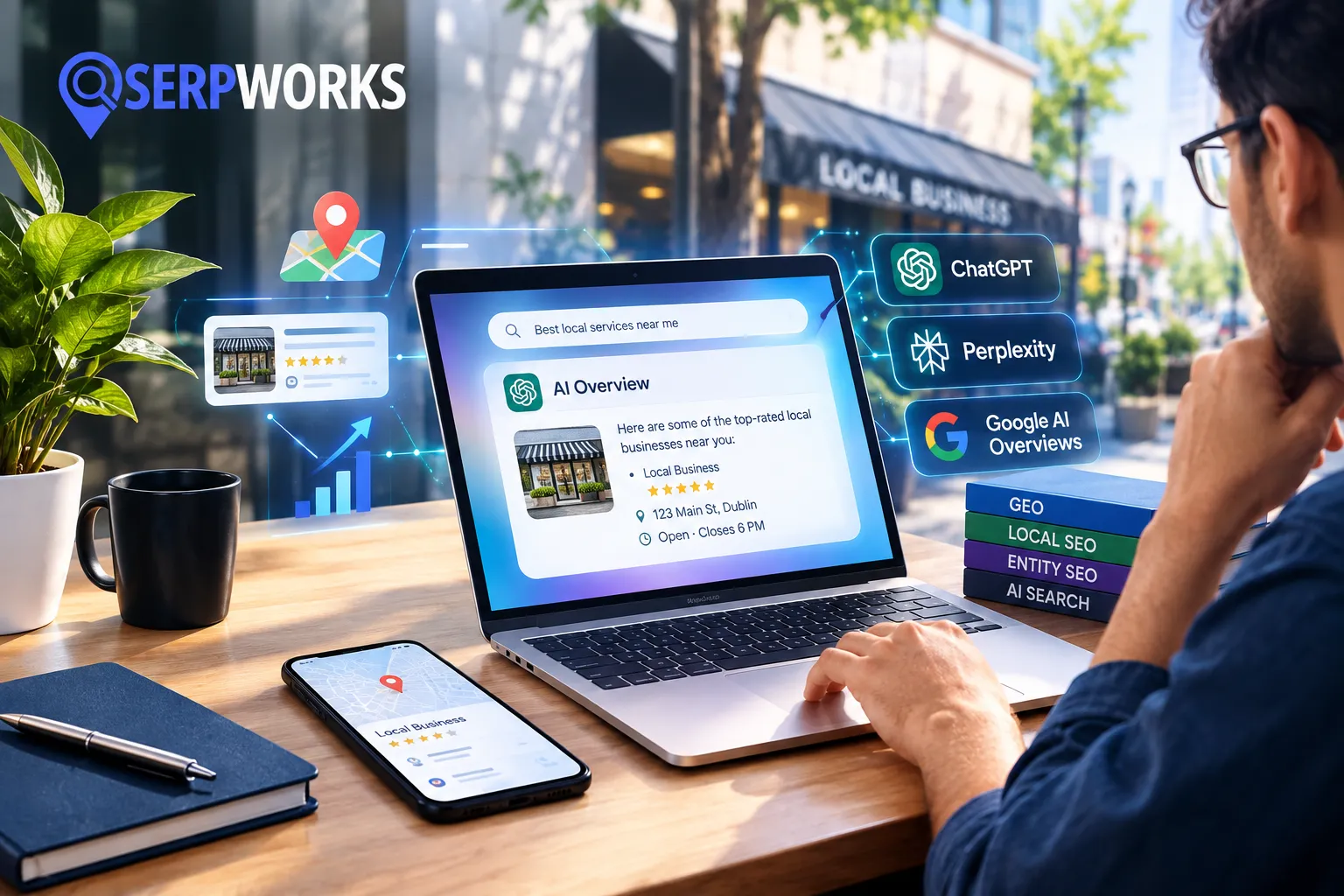
Ranking on page one of Google no longer guarantees a click. Generative Engine Optimization, or GEO, is how local SEO freelancers keep businesses visible when engines like ChatGPT, Perplexity, and Google AI Overviews answer the question before a user ever scrolls on Google Maps or search results.
CTR Loss in AI Overviews
The top organic result loses roughly 58% of its click-through rate once an AI Overview appears above it—and overviews now show up on close to half of all Google searches. Source data via Ahrefs, optimization standards adapted from Google AI Guidelines and SERPworks.
Why Page One Rankings No Longer Guarantee Visibility
Traditional local SEO focused on winning the Google Map Pack and top organic listings. Today, AI search engines synthesize direct answers and cite only a select few sources. Industry studies show that nearly 60% of Google searches now end in a 'zero click', where users get their answer directly on the results page. Winning modern search is no longer about outranking ten competitors for a link—it is about becoming the verified local entity that AI models trust and cite.”
Grounding Your Business in AI Retrieval Systems
AI platforms use Retrieval-Augmented Generation (RAG) to pull real-world facts before writing an answer. They heavily favor businesses with clear, verifiable signals—which matters more as local "near me" queries keep climbing.
- Location Granularity: Name a specific neighborhood, landmark, or transit hub near the business rather than just relying on the city name.
- Directory Consistency: Keep service areas, hours, and primary categories 100% identical across your website, Google Business Profile, and local directories.
- Intent Matching: Directly answer the exact conversational phrasing customers use in local and service area searches.
Why Query Fan-Out Breaks Generic Content Strategies
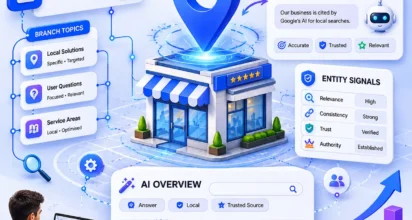
A single user prompt rarely remains a single query. Modern AI search engines break complex prompts down into several sub-questions, retrieve individual answers for each, and stitch the final context together.
Traditional / Generic Strategy
Focuses on a single broad keyword. Because it answers only one branch of the query, the page gets passed over when the engine tries to resolve sub-queries.
The GEO Approach
Maps out and answers all fan-out branches across local context, pricing, and specific user intent—becoming the complete resource AI models cite.
Schema and Crawler Access AI Engines Actually Read
Winning a citation takes a specific technical setup, not a generic template.
- Structured Data: Deploy LocalBusiness, Organization, and FAQPage markup built to strengthen overall Entity SEO.
-
Crawler Permissions: Publish a clean
llms.txtfile summarizing core services and locations, while verifying yourrobots.txtallows crawlers like GPTBot, PerplexityBot, and Google-Extended. - Architecture Design: Maintain a flat site structure so a single complex query can easily fan out into distinct sub-queries that AI engines can retrieve and index.
Writing Answer Capsules That Get Cited
An answer capsule is a self-contained, 40 to 60 word paragraph answering one question with no filler. Short, factual, link-free paragraphs are simply easier for an AI engine to lift and attribute cleanly.
Zero-Link Efficiency: Audits show that 91% of cited capsules contain zero internal links, as links introduce unnecessary noise during the retrieval phase.
Traditional SEO vs. Generative Engine Optimization
Shifting a client from keyword-driven SEO to intent-focused GEO takes real technical execution. Here is how core signals differ between models:
| Factor | Traditional SEO | Generative Engine Optimization (GEO) |
|---|---|---|
| Goal | Rank in top 10 links | Get cited inside the AI answer |
| Core Signal | Backlinks and keyword density | Entity consistency and grounded facts |
| Content Format | Long, link-heavy pages | Short, self-contained answer capsules |
How Freelancers Build AI-Ready Local Listings
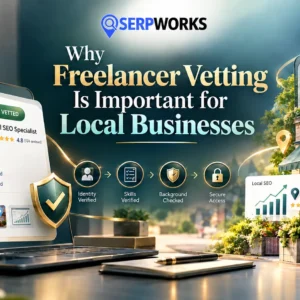
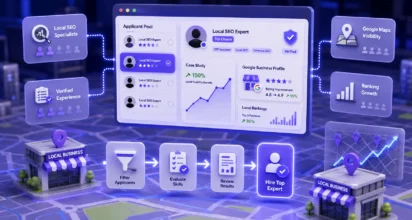
Freelancers on Serpworks are vetted specifically for this kind of work—structuring Schema.org markup, grounding local facts, and writing citable content so a business reads as a verified Knowledge Graph node instead of another page competing for a ranking screenshot.
Off-Site Authority: Building an Independent Source Universe
AI engines do not trust a website alone. They corroborate it against outside sources—and different engines barely agree, sometimes sharing as little as one in ten sources for the same prompt.
The Power of Video Transcripts: YouTube has become one of the most cited sources in AI search. A structured video transcript backed by VideoObject schema often carries significantly more weight than a standard blog post.
Stay Ahead in the Age of AI Search
As traditional clicks give way to Generative Engine Optimization, master the strategies needed to keep local entities verified, cited, and visible.
Follow Serpworks for Freelancer Tips & Strategies