
Entity SEO for Local Experts A New Skillset for 2026
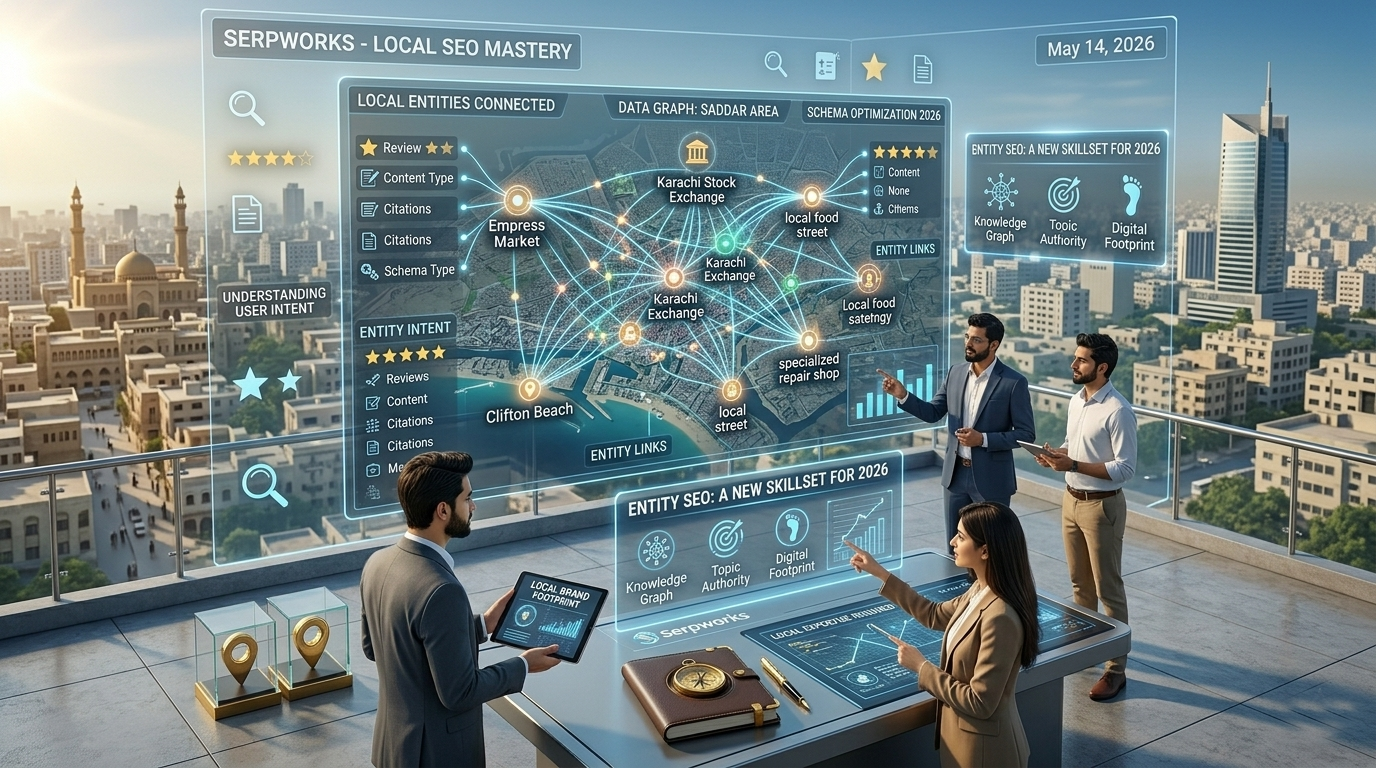
Over recent years, local SEO has quietly shifted. What used to be about map packs, citations, and proximity is evolving into something much deeper: identity. In 2026 and beyond, Google’s AI systems will favor businesses it understands entities with clear relationships, reputation, and contextual presence.
For local SEO professionals, this means mastering Entity SEO, not just optimizing signals, but constructing a digital identity Google can parse, trust, and surface across AI, search, and maps.
In this article, you’ll find both the theory and the step-by-step methods to adopt Entity SEO for your local clients, along with visuals (graphs, tables, entity maps) that illustrate how to build and measure entity strength.
The Local SEO Shift No One’s Talking About
Once upon a time, local SEO was about checking off tasks: get your Google Business Profile (GBP) “perfect,” collect directory citations, pepper your pages with local keywords, and gather reviews. That model served well in a ranking ecosystem built on pattern matching and signal stacking.
But as Google layers in RankEmbed, AI Overviews, local intent modeling, and more complex semantic systems, that checklist model is becoming obsolete. Two identical businesses in the same city may diverge massively in visibility, not because one has better GBP optimization but because Google knows more about one of them as an entity.
Today, recognition matters more than proximity. When Google feels confident it can describe your business, associate it with trustworthy sources, and cite it across surfaces, that business will outrank others, even if those others have more traditional SEO signals.
Entity SEO helps you teach Google who you are, rather than what you do.
The Problem with “Old” Local SEO
Traditional local SEO treated signals as isolated levers. Your visibility depended on how many citations you had, how optimized your GBP was, or how many “keyword mentions” you squeezed into your content. But in a meaning-based paradigm, isolated signals don’t deliver.
In the new world, Google is less interested in discrete signals and more interested in interpretation. It wants to build a mental model, a knowledge graph around your brand, your location, your services, your reputation, and your relationships.
Traditional Local SEO
- Focus on citations, GBP fields, and local keywords
- Measured by map pack rank and citation counts
- Proximity + keyword relevance dominate
- Backlink & directory count focus
- Manual optimization mindset
Entity SEO (2026+)
- Focus on relationships, context, and identity
- Measured by entity visibility (AI Overviews, knowledge panels)
- Semantic proximity and trust dominate
- Co-occurrence, mentions, and entity signals
- Intentional entity construction
One of the starkest shifts you’ll observe is how some local brands with minimal GBP activity are appearing in AI Overviews and top SERP snippets. Their advantage? Google’s entity graph already “knows” them.
In other words, visibility is less about what you optimize and more about what you teach Google to know.
How Google Understands Entities (And Why That Decides Local Rankings)
To grasp Entity SEO, we need to peek under the hood at how Google models knowledge. An entity is anything that can be uniquely identified, such as a business, a person, a location, or a concept. Google connects entities via relationships, attributes, contextual evidence, and network reinforcement.
When your site and external web presence feed consistent signals, name, location, owner, services, citations, media mentions, Google integrates you into its knowledge graph, linking you with related entities (city, services, local media, reviewers).
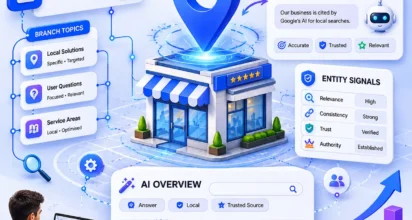
Here’s a conceptual Entity Relationship Graph
Each connection reinforces Google’s confidence in your identity. The stronger, clearer, and more numerous these connections, the more likely your entity will be surfaced across AI Overviews, knowledge panels, and SERP features.
Two internal systems particularly matter:
- RankEmbed: Measures semantic closeness between your entity and topics (services, location, expertise).
- Navboost: Captures behavioral and navigational signals (clicks, brand searches, dwell on entity pages).
These systems don’t just index pages; they assess entity strength. And when Google is confident, your brand becomes not just a result, but a discovered concept.
Becoming an Entity Builder: The 2026 Local SEO Skillset
To compete in 2026, local SEO experts must shift from optimizers to entity architects. You’ll build identities using structured data, narrative consistency, and web relationships, not just fragmentary signals.
In 2024, your priority might have been technical SEO or local keyword clustering. By 2026, your priority becomes identity coherence: ensuring every piece of content, mention, review, and link converges on a single brand narrative.
Concretely, that means aligning your website, GBP, reviews, author bios, press mentions, and directories so they all broadcast the same entity. It means weaving relationships in your content, e.g., linking service pages to your About page, naming founders, referencing your city identity, and creating content clusters that reinforce your domain expertise.
What you build is not a set of optimized pages, but a web of meaning, a digital identity Google can map, query, and trust.
How to Implement Entity SEO for Local Businesses
Start by strengthening your core identity pages. The About page, Team page, and Service pages must clearly articulate the business, the people behind it, and your unique value. Use structured schema: LocalBusiness, Organization, Person (for owners or staff). Link team member schemas back to your business with sameAs or affiliation properties.
Next, contextualize your identity. Insert schema types like Service, Review, PostalAddress, GeoCoordinates, and even Event if applicable. Map your entity to city, area, or region entities. Provide consistent names, addresses, contact information, and business descriptions across your site and external profiles.
Then, build out external signals that confirm your identity. Secure mentions on trusted local blogs, news outlets, event pages, not just generic directories. These mentions are not just links; they’re confirmations in Google’s entity graph.
Inside your site, reinforce connections via internal linking. Ensure service pages point to About and location pages in a natural narrative context. Use content clusters that connect your core services with expertise topics.
Finally, monitor how Google presents your entity. Check AI Overview summaries, knowledge panels, brand SERP, and “People also ask” alignments. If Google’s summary of your business is incomplete, misaligned, or missing components, use those gaps to guide your refinement (update schema, add missing content, gain missing mentions).
Entity SEO is ongoing; you’re teaching Google more about yourself over time.
Real-World Example Of Entity SEO
Imagine a dental clinic called “SmileBright Dallas.” They had hundreds of reviews, a well-maintained GBP, and plenty of local keywords, yet they rarely appeared in AI Overviews or featured snippets.
They revised their approach. They rewrote their About page, adding founders’ bios, experience history, certifications, and affiliations. Every dentist had their own profile page tied via schema to SmileBright. They sponsored a local health fair, earning coverage on local media, which mentioned “SmileBright Dallas” in context. They also created content clusters around “cosmetic dentistry in Dallas,” “oral health tips in Dallas neighborhoods,” and “best pediatric dentists in Dallas.”
Within a few months, instead of lagging behind in SERP features, SmileBright Dallas began appearing in AI Overviews for queries like “best dental clinic in Dallas,” even with fewer backlinks than rivals.
The transformation wasn’t in optimization volume; it was in clarity of identity.
Measuring Entity SEO Success
You cannot rely solely on keyword rankings anymore. Instead, track how recognized your brand is across AI and Google’s knowledge systems.
| Metric / Signal | Interpretation |
|---|---|
| Appearance in AI Overview | Your entity is trusted enough to be summarized |
| Knowledge Panel presence | Google considers you a distinct, queryable concept |
| Increase in branded search volume | Users associate the name with your services |
| Topic co-occurrence in mentions | You’re being talked about alongside relevant topics |
| Review sentiment consistency & depth | You’re building reputation, not just volume |
| Mentions across authoritative outlets | Confirmation in external entity networks |
When Google routinely describes your business in its AI summaries enough that users see a coherent, accurate brand presence, that’s proof your entity is maturing.
The AI Entity Economy of 2026 and Beyond
We are entering an era I call the AI Entity Economy. In this new ecosystem, businesses aren’t ranked by how well their pages are optimized; they are ranked by how well their identity is understood.
Keyword targeting becomes a fallback; entity clarity becomes primary. Local SEO experts become brand engineers. They think not in terms of “pages” or “citations” but in networks: how entities relate, reinforce, and validate each other.
A simplified visibility timeline you can render visually:
2023 → Keyword Matching → SERP Rankings
2024 → Proximity + Reviews → Map Pack
2025 → Semantic Understanding → AI Overviews
2026 → Entity Dominance → Multisurface Visibility
As that timeline suggests, the future belongs not to strong pages but strong entities, brands that Google can cite, trust, and reference across surfaces.
In 2026 and beyond, your entity becomes your keyword. And the SEOs who internalize that won’t just survive, they will thrive across AI, maps, and search.