
How to Hire a Local SEO Freelancer in the Age of AI Overviews & Ask Maps: The Buyer’s Vetting Playbook

If you manage local operations or run a service business, your customer acquisition strategy likely hinges on a familiar goal: appearing at the top of the Google Map Pack.
For years, local search optimization followed a straightforward checklist: match your business Name, Address, and Phone number (NAP) across directories; pile up generic five-star reviews; and insert location keywords into your page titles.
That playbook is officially outdated.
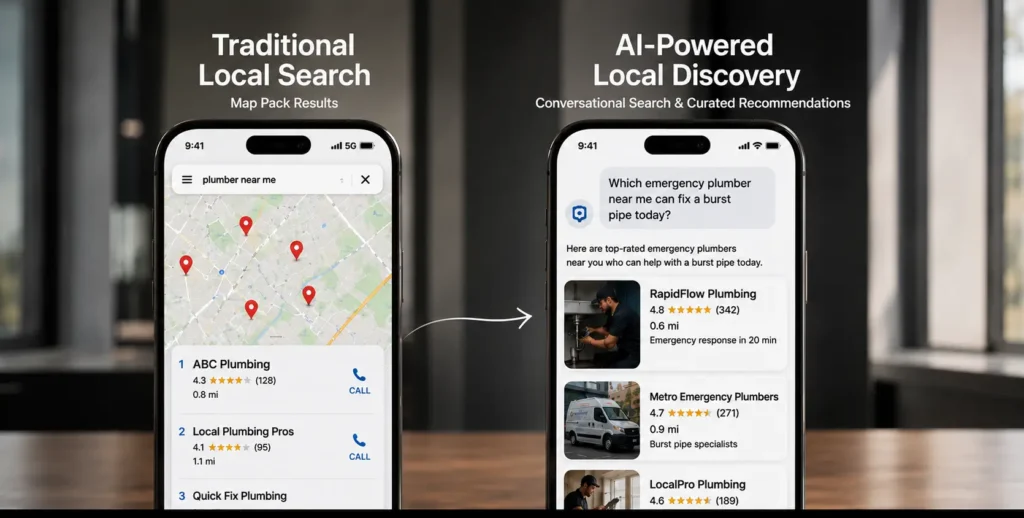
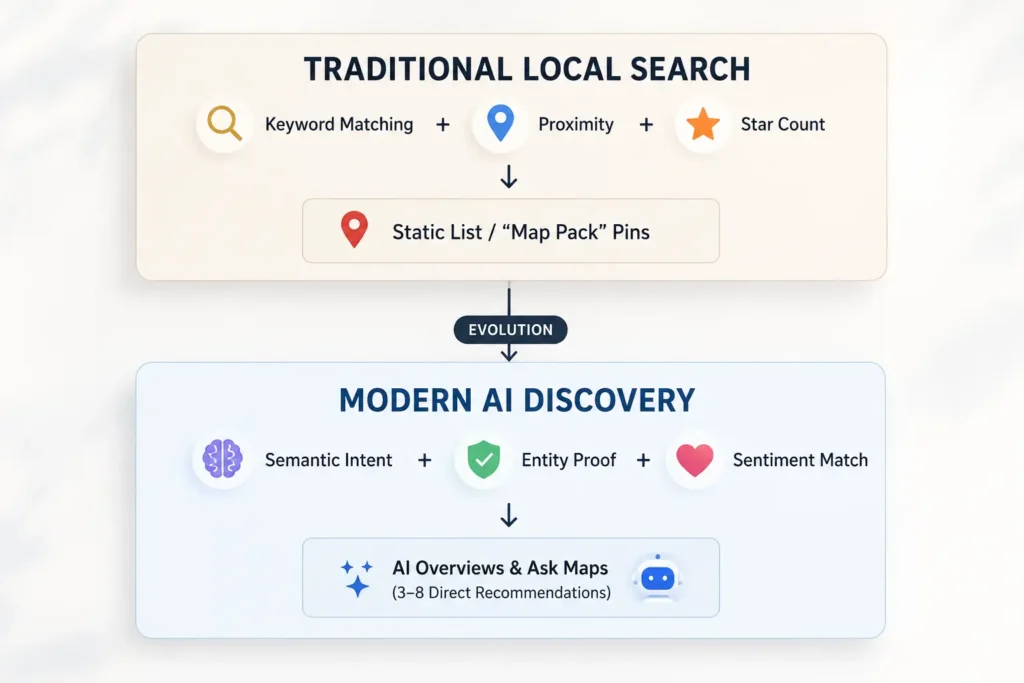
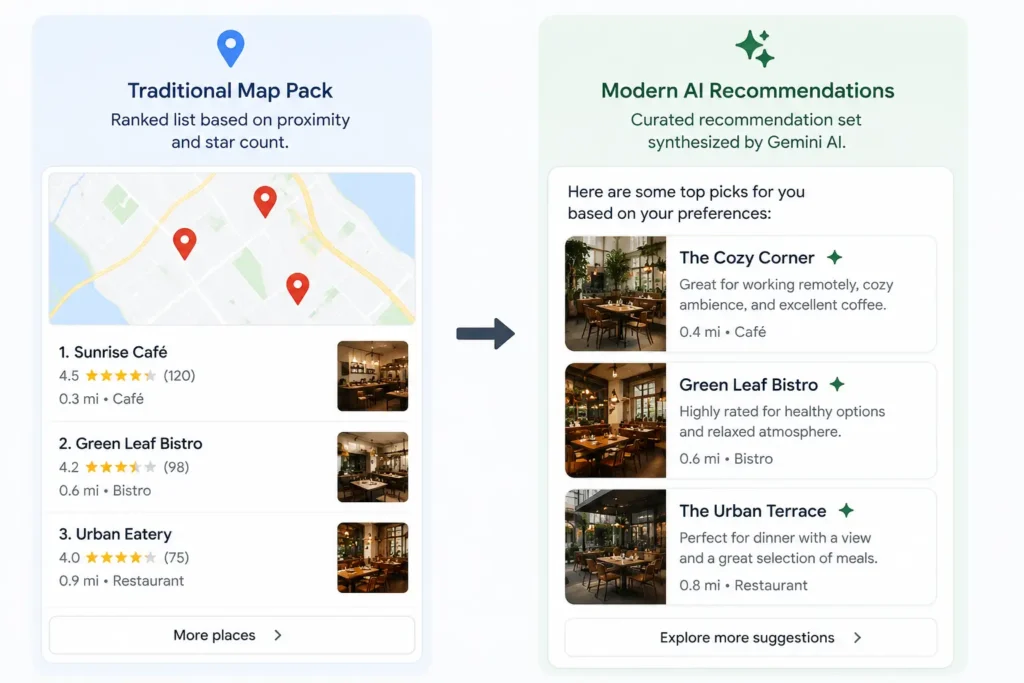
The shift toward AI-driven search, marked by Google Search AI Overviews and the launch of Ask Maps, has fundamentally transformed local discovery. Google no longer presents users with a static catalog of nearby pins. Instead, powered by Gemini, it acts as a conversational concierge that synthesizes user reviews, photos, business attributes, and real-time operational data to directly recommend a curated list of businesses.
When hiring a local SEO freelancer today, relying on outdated criteria risks hurting your business visibility. Anyone still promising “200 quick directory citations” or “keyword-stuffed business profiles” is using strategies that no longer align with how modern search engines operate.
This playbook outlines how local discovery works today, what tactics to avoid, and the exact interview questions to ask so you hire a strategist built for the modern search landscape.
The following framework reflects current market rates for recurring GBP and local SEO management. Pricing scales with the number of target keywords, content volume, and technical deliverables.
The Core Paradigm Shift: From Ranked Lists to AI Recommendations
To hire the right expert, you first need to understand how user behavior and search engines have shifted.
The “Conversational Concierge” Model
Instead of typing “plumber near me,” users now ask long-tail, highly nuanced questions like: Which emergency plumber in my area can fix a burst pipe today without overcharging me?
When a user submits a query like this into Search or Ask Maps, Gemini doesn’t just check who is closest. It evaluates:
- Attribute Matching: Are specific services, payment options, and features explicitly listed in the business profile?
- Review Sentiment Parsing: Have customers written detailed accounts mentioning fair pricing, honest quotes, or same-day burst pipe repair?
- Visual Verification: Do customer and profile photos provide visual proof of tools, work trucks, and real team members?
The Business Impact
Ranked lists that used to display 10 to 20 options are giving way to AI summaries that highlight a smaller set of recommended businesses. If your digital footprint lacks detailed, verifiable context, AI models will pass over your business, even if you are physically closer to the user than the recommended competitor.
Continue using AI Cursor?Keep it onTurn Off
Modern Local SEO Signals: The New Playbook
A qualified local SEO freelancer focuses on building retrieval fuel, the structured and unstructured data that AI models scan to form recommendations.
Continue using AI Cursor?Keep it onTurn Off
1. Natural Language & Intent Optimization
Modern strategies align content with natural human speech patterns. Your Google Business Profile (GBP) description, website service pages, and FAQs must directly address real-world, context-heavy customer queries.
2. Entity-Based Local SEO & Structured Data
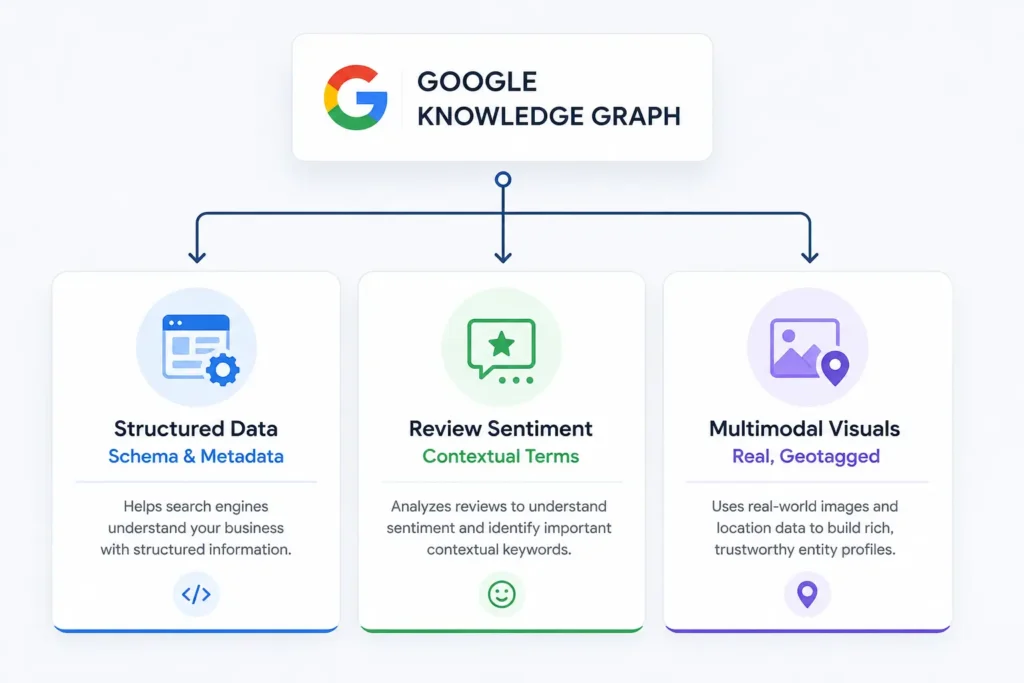
Google views your business as an “entity” in its Knowledge Graph. To establish this entity, a modern strategist implements microdata (such as LocalBusiness and openingHoursSpecification schema) across your site. They also focus on unstructured citations, earned mentions in local news, neighborhood blogs, and regional podcasts, which reinforce your business’s credibility.
3. Review Narrative Depth (Review Keyword Density)
A simple 5 stars, great service! review offers zero facts to an AI retrieval model. Modern local SEO involves guiding happy customers to leave descriptive reviews mentioning specific services, problem descriptions, and location details.
Example: A review stating, “The team replaced our 50-gallon water heater in under two hours on a Sunday morning” provides four distinct facts that Gemini can extract to match future search prompts.
4. First-Party Real-Time Data & Visual Proof
AI discovery rewards operational accuracy. Syncing holiday hours, offering direct booking options, and regularly uploading authentic, geotagged photos of completed work provide visual proof that your business is active and reliable.
The Interview Framework: Vetting Questions & Ideal Answers
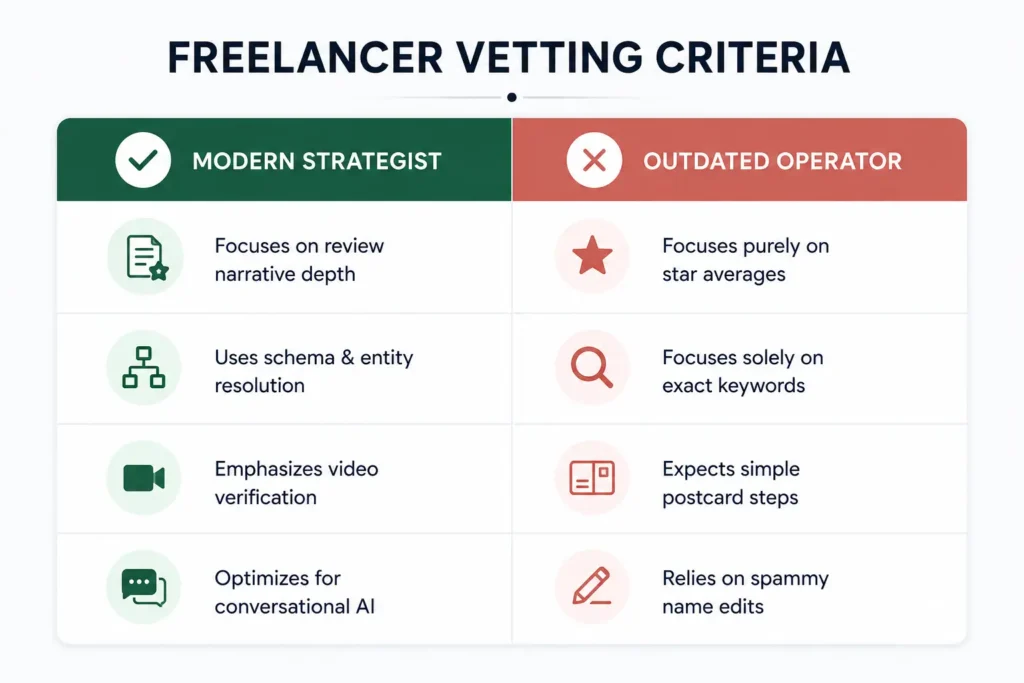
When interviewing local SEO freelancers, use these target questions to distinguish forward-thinking strategists from those relying on legacy tactics.
Continue using AI Cursor?Keep it onTurn Off
Question 1: How do you optimize a business for Ask Maps and AI Overviews?
- Ideal Answer: We optimize for attribute completeness, deep review sentiment, and entity clarity. We build ‘retrieval fuel’ across your profile and website so conversational AI can pull specific facts to recommend your business for complex queries.
- Red Flag Answer: I’ll build 200 directory links and insert target keywords into your business name.
Question 2: What is your strategy for managing Google reviews?
- Ideal Answer: We focus on review depth and recency. We implement systems that prompt satisfied customers to mention the specific service performed and the specific problem solved, then reply with detailed responses to reinforce those entity signals.
- Red Flag Answer: We send template replies to every review and try to get as many 5-star ratings as fast as possible.
Question 3: How do you handle the Google Business Profile Q&A section?
- Ideal Answer: Since Google has phased out native GBP Q&As, we migrate those common customer questions directly to your website’s FAQ page, markup the content with FAQ Schema, and ensure search engines can reference them as conversational data.
- Red Flag Answer: We just post our own questions and answers directly on your GBP profile every week.
Question 4: What role do photos play in local visibility?
- Ideal Answer: Photos are processed as visual data. We collect authentic, high-resolution photos and short videos showing your physical location, equipment, and staff, helping AI models confirm your real-world presence.
- Red Flag Answer: Photos are just for aesthetics; we can buy a stock photo pack to keep the profile looking updated.
Question 5: How do you handle Google Business Profile verification or reverification?
- Ideal Answer: We prepare a continuous video verification recording that shows permanent street signage, branded work vehicles, toolsets, and immediate proof of management, such as unlocking the main entrance.
- Red Flag Answer: We’ll just request a postcard and wait for it to arrive.
Major Red Flags: Outdated Tactics That Risk Account Penalties
Avoid working with candidates who suggest or rely on any of these risky methods:
GUARANTEED RANKINGS, NAME KEYWORD STUFFING, STOCK PHOTOS
No one controls AI outputs. Direct path to suspension. Degrades profile trust.
- Guaranteed Top Placement in AI Summaries: AI-generated recommendations are dynamic and context-dependent; guaranteed rankings are mathematically impossible.
- Keyword Stuffing Your Legal Business Name: Adding descriptors (e.g., turning “Apex Plumbing” into “Apex Plumbing – Best Emergency Burst Pipe Repair”) violates Google’s terms and often leads to immediate profile suspension.
- Automated Bulk Directory Blast: Submitting your business info to hundreds of unvetted Web 2.0 directories creates inconsistent NAP data, lowering search engine trust.
- Incentivized or Fake Reviews: Buying reviews or using automated bots violates FTC guidelines and can lead to permanent profile blacklisting.
- Inconsistent Live Data: Failing to update special holiday hours, phone numbers, or temporary service changes lowers profile confidence scores.
The Ultimate Local SEO Buyer’s Vetting Checklist
Use this practical checklist during your hiring process to evaluate candidate proposals and scope of work.
Phase 1: Technical & Entity Audit
- 100% NAP Consistency Check: Audit primary directory listings to ensure matching name, address, and phone details.
- Location Page Architecture: Confirm every business location links to a mobile-friendly page featuring embedded maps and unique local content.
- Schema Implementation: Verify LocalBusiness, FAQPage, and service-specific Schema markup are present and error-free.
Phase 2: AI Readiness & Content Strategy
Attribute Completeness: Review and complete all category-specific GBP attributes (e.g., accessibility options, payment methods, amenities).
- Structured Review Strategy: Establish a post-service workflow that asks customers for specific descriptions of the work completed.
- Natural Language FAQ Hub: Build an on-site FAQ database mapped directly to real customer questions.
- Visual Media Protocol: Set up a process for uploading authentic, geotagged workplace photos monthly.
Phase 3: Reporting & KPIs
- Conversion Metrics over Vanity Ranks: Track actual business actions (calls, online bookings, direction requests) instead of static keyword positions.
- Query Intent Tracking: Monitor long-tail conversational phrases driving discovery in Search Insights.
- Review Sentiment Monitoring: Track review velocity and sentiment shifts for target service terms over time.
Frequently Asked Questions
Why aren’t generic five-star reviews enough anymore?
Star ratings indicate general customer satisfaction, but they lack detail. Modern AI engines analyze review text for concrete details, like specific services, turnaround times, and pricing transparency, to match businesses with complex, conversational queries.
How long does it take to see results from modern Local SEO?
Initial updates to structured data and profile attributes are often indexed within a few weeks. However, building conversational relevance, review depth, and local entity authority typically takes 3 to 6 months of consistent effort.
Continue using AI Cursor?Keep it onTurn Off
Will AI search features make traditional websites obsolete?
No. AI Overviews and Ask Maps rely on your website’s service pages, case studies, and structured Schema markup as primary sources for factual details. A well-structured website provides the foundation that powers your AI visibility.
Continue using AI Cursor?Keep it onTurn Off